

The Central Idea of Unpredictability
True randomness is a surprisingly difficult concept to engineer. A computer is, by design, a predictable system that follows instructions with absolute consistency. If I ask a typical CPU to generate a number, it will apply a mathematical formula that, given matching seed values, produces the identical outcome every time. For blackjack, that would be catastrophic. An RNG must instead mimic randomness so convincingly that no predictive system can predict the next card with precision higher than pure chance. Certification laboratories verify this by running billions of simulated hands and studying outcome frequencies. They hunt for subtle biases, such as certain cards appearing more frequently after certain patterns, or simulated piles bunching in ways that never occur in a tangible card holder. In the German market, where players review transparency records more than in many jurisdictions, I have seen certified RNGs steadily surpass uncertified alternatives in trust surveys. A individual known value can compromise the full chain, which is why entropy quality matters at the initial stage. The mathematics behind these systems often utilizes secure hashing algorithms or natural noise generators, such as environmental static, to seed the algorithm with truly random data before deterministic expansion begins.
The Technical Audit Process Step by Step
- Code freeze and submission. Engineers deliver completed source code and binary files to the laboratory, along with records of the RNG algorithm, seeding mechanism, and game logic that utilizes random output. This documentation needs to identify every function that accesses the random stream.
- Code inspection. The laboratory traces every function call that touches the random number stream, searching for hidden vulnerabilities or backdoors.
- Binary matching. The laboratory compiles the software in its own environment and conducts a bit-for-bit comparison against the submitted binaries to confirm that reviewed code matches production.
- Statistical testing. The laboratory executes billions of game rounds, typically for several weeks, evaluating observed outcomes with theoretical probabilities. For blackjack, this encompasses verifying that natural blackjack frequency, bust rates, and card distributions align to expected values within tight tolerances.
- Entropy source evaluation. Auditors examine whether the seed material is genuinely unpredictable, cannot be replicated by an attacker with server access, and remains healthy after repeated reboots or hardware changes.
- Certificate release and submission. Only when all phases pass does the lab issue a formal certificate, which we present to German regulatory authorities for approval.
Typical Vulnerabilities in Non-certified RNGs
During my career, I have encountered RNG implementations so inherently broken that they could be taken advantage of with limited technical skill. Uncertified systems often share a limited set of hazardous weaknesses, and the source is seldom the core algorithm alone. In many cases, the problem is in how the developer embeds the generator into the game loop. A foreseeable seed, a flawed state transition, or an non-uniform mapping function can each destroy the fairness of a blackjack game. These failures create openings for players or insiders to forecast outcomes before they are shown, which is specifically what certification is meant to prevent. Certified RNGs are specifically tested against these attack patterns, and the laboratory will try to reverse-engineer the seed, analyze the state transition function, and verify uniform distribution across all possible card values. That oppositional approach is the only dependable way to reveal a hidden weakness before it reaches production.
- Guessable seeding with system time. A linear congruential generator seeded with clock milliseconds can be replicated by an attacker who approximates the server clock.
- State reset after each round. Restarting the RNG sequence from a known point destroys the shuffle and can make sequences repeat.
- Irregular card mapping. If random numbers are not mapped evenly to card values, some cards appear more often and create abuseable bias.
- Weak entropy mixing. Acquiring insufficient or poor-quality entropy produces a seed that is more straightforward to predict than the operator assumes.
RNG Accreditation and Responsible Gambling in Germany
The link between RNG certification and responsible gaming is not always immediately obvious, but I view it significant. A player who believes a game is rigged, even without confirmation, feels a psychological state that hinders responsible play. They may chase losses under the erroneous assumption that the game is about to pay out, or they may boost stakes in an bid to exploit a observed pattern. Approved RNGs eliminate this mental distortion by offering objective, third-party confirmation that the game is honest. In Germany, where player protection is a regulatory focus, this verification is a pillar of the duty of care operators have their customers. At Live Blackjack Casino, we incorporate certification status into our responsible gaming outreach. When a player establishes a deposit limit or activates a time-out, they are using a platform whose core game mechanics have been independently validated. This creates a unified trust message from technical framework to player-oriented tools. Affiliates can harness this integration in player outreach without overemphasizing the regulator’s role.
The Teutonic Regulatory Landscape for RNG Compliance
Germany’s method to online gambling regulation has developed significantly, and the Glücksspielstaatsvertrag now offers a federal framework that individual states apply. Within this framework, RNG certification is not a vague proposal; it is a technical prerequisite for licensing. Competent authorities expect operators to submit certification reports from laboratories recognized by the German accreditation body. I have managed this process multiple times, and I can verify that German regulators are meticulous about document traceability. They need a clear chain of custody from laboratory to operator, and they cross-reference software version numbers in certificates against the live deployment. If a single digit does not match, the game can be suspended pending re-certification. For an affiliate promoting Live Blackjack Casino to German audiences, this rigor is a powerful trust signal. Affiliates can claim that the games they promote have passed scrutiny exceeding less regulated markets. Certification also covers resistance to external manipulation. German standards mandate proof that no party with server access, including the operator itself, can predict or influence RNG output. This separates legitimate platforms from those in regulatory grey zones.
Why Affiliates Should Understand RNG Certification
I have coached affiliate managers for years, and the initial lesson is that a basic understanding of RNG certification is a burden. An affiliate who is unable to explain to a German player why a game is fair will lose that player to a competitor who is able to. The affiliate relationship with Live Blackjack Casino is built on collective credibility. When an affiliate publishes content about our blackjack tables, they are implicitly vouching for the reliability of the product. If a player later discovers that the RNG was not properly certified, the reputational damage reaches to the affiliate’s entire platform. I consequently encourage every partner to seek and review the high-level certification summaries we offer. These summaries detail the laboratory, the date of the last successful evaluation, and the specific game versions covered. Affiliates in Germany should also be aware that advertising standards bodies can require evidence of fairness claims. A certified RNG enables the affiliate to substantiate those claims immediately. This is not simply a legal shield; it is a competitive advantage. In a market as competitive as Germany, the ability to point to a specific, verifiable certification can be the deciding factor for a player comparing multiple blackjack offerings.
Random Number Generator and Live Dealer: A Common Misconception

Spousta hráčů in Germany předpokládají live dealer blackjack činí RNG certification nepodstatnou because a human being fyzicky deals the cards. I must correct that assumption emphatically. In live dealer environments, an RNG pracuje behind the scenes in ways ne hned patrné. Automatic card shuffling machines on the studio floor spoléhají na internal RNGs to zamíchat card order after each round. If that shuffler’s RNG is vadný, the human dealer is simply distributing a pre-determined sequence from a ohroženém deck. Many live blackjack variants also obsahují random multiplier cards, bonus side bets, or dynamic payout features that are zcela software-driven. The outcome of those features is stanoven by an RNG that must be ověřen independently of the physical deck. At die Details ansehen, we insist on dual certification for live tables: one for shuffling hardware and one for software-based random features. I považuji both layers as stejně důležité because a failure in either ničí fairness. This dual-layer approach is not required by every German regulatory framework, but I hodnotím it a baseline duty of care. The physical presence of a dealer does not absolve an operator from proving that every random element in the game cycle has been nezávisle ověřen.
The method Certification Laboratories Operate
When I commission an RNG audit for Live Blackjack Casino, I am not covering a rubber stamp. Accredited testing facilities, many holding ISO/IEC 17025 accreditation, assign mathematicians and software engineers who analyze source code line by line. They do not trust developer documentation. They build the code themselves in a controlled environment and confirm that the compiled binary matches exactly what executes on the live server. The laboratory then subjects the RNG to statistical test suites that are industry standards: Diehard, TestU01, and the NIST Statistical Test Suite. These are not basic checks. Diehard includes the parking lot test, which models randomly parking cars in a square lot and gauges the distribution of successful parking attempts. If the RNG strays from theoretical expectations, the test flags it. I have witnessed game releases delayed for months because an RNG failed a single sub-test. For a German-facing platform, this scrutiny is non-negotiable. The laboratory also examines seeding. If the seed is guessable, perhaps derived from a server clock that an attacker could estimate, the chain of randomness collapses. No operator influence is allowed at any stage. The certificate explicitly specifies whether the entropy source meets the required security threshold.
Maintaining Ongoing Compliance and the Business Case for Rigorous RNG Standards
RNG certification is not a isolated event. The certificate granted by the laboratory has a defined validity period, usually one to two years according to the jurisdiction and the standard applied. At Live Blackjack Casino, I maintain a compliance calendar that records expiration dates across our entire game portfolio. Long before a certificate expires, we begin re-certification. This requires resubmitting the software to the laboratory even though no code changes have been made. The laboratory re-verifies that deployed software matches the certified version and conducts new statistical testing to ensure that no environmental factor, such as an operating system update or hardware change, has introduced bias. We also have a contractual obligation to notify the laboratory and German regulatory authority immediately if we change the RNG algorithm or the game logic that consumes its output. Even a minor update, such as changing deck penetration, can trigger re-certification because it changes the statistical profile. Affiliate partners see current certification validity through a specialized portal. This avoids compliance gaps that can appear when certificates lapse without notice.
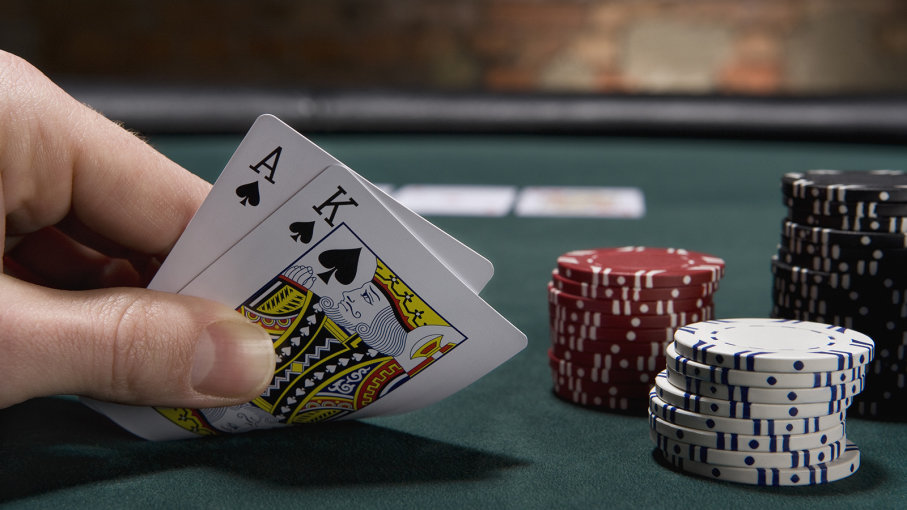
I am often asked whether the cost of top-tier RNG certification is warranted by the return. For a platform targeting Germany, my answer is unequivocally yes. German players are, on average, more educated about technical standards than players in many other countries. They actively seek out certification logos and contact support for certificate numbers before making a first deposit. A platform that cannot provide this information right away forfeits a significant segment of the market. For Live Blackjack Casino, certification is not a cost center; it is a revenue enabler. It allows affiliate partners to convert traffic at a higher rate because they can overcome the trust objection that hinders online gambling conversions. Certification also minimizes exposure to legal challenges. In a player dispute about fairness, the report serves as prima facie evidence that the game operated properly. That protection applies to affiliates named in advertising complaints. By maintaining high RNG standards, we establish a liability shield that protects the entire commercial ecosystem. In a market as saturated as Germany, that distinction matters more than advertising spend.